
Mastering the Habit Stacking Technique for Achieving Goals Effectively
Discover how to use the habit stacking technique to achieve your goals effectively with practical strategies and insights.


25 min read
Getting Started with Habit Stacking
Did you know that nearly 45% of our daily actions are driven by habits rather than conscious decisions? This startling statistic, highlighted by a recent article in Psychology Today, underscores the profound impact that habitual behavior has on our lives. In recent times, individuals have increasingly turned to the habit stacking technique as a powerful method for achieving goals effectively. By stacking new habits onto existing ones, you can create a seamless routine that propels you toward your objectives with minimal friction.
This article will delve into the essentials of habit stacking, starting with a clear understanding of the concept itself. We’ll explore why setting specific goals is crucial for success and how effective goal setting strategies can enhance your productivity. Additionally, we will provide an overview of how habit stacking can transform your daily routines into powerful pathways toward achieving your aspirations.
Understanding the concept of habit stacking is vital. This method, popularized by author S.J. Scott, involves identifying a current habit you already perform consistently and attaching a new habit to it. For example, if you consistently drink a cup of coffee each morning, you might stack a short meditation session right after. This creates a linked routine that enhances your life without requiring significant additional effort. The Verywell Mind website elaborates on how this approach taps into the brain’s natural proclivity for patterns, making it easier to adopt new behaviors.
The significance of goal setting strategies cannot be overstated. Research indicates that individuals who set clear, actionable goals are more likely to achieve them. By incorporating habit stacking into your goal-setting framework, you can create a compelling system that keeps you accountable and motivated. Youll learn how to stack habits in a way that not only complements your existing routines but also aligns with your personal and professional aspirations.
Finally, we will discuss how habit stacking can transform your routines, turning mundane tasks into meaningful rituals that foster growth and progress. By the end of this article, you will have a comprehensive understanding of how to implement this technique effectively, allowing you to navigate the path toward your goals with newfound clarity and purpose. Whether you aim to enhance your health, boost productivity, or cultivate new skills, habit stacking can be a game-changing strategy in your journey.
Understanding Habit Stacking
Definition of Habit Stacking
Habit stacking is a productivity technique that involves pairing a new habit with an existing one, creating a simple and effective routine. This method was popularized by James Clear in his bestselling book, “Atomic Habits.” The idea is straightforward: by linking a new behavior to a habit that you already perform consistently, you can increase the likelihood of sticking to that new behavior.
For example, if you already have a daily routine of drinking coffee each morning, you could stack a new habit of journaling immediately after enjoying your coffee. This not only makes the new habit more manageable but also builds upon the momentum of the existing habit.
The Science Behind Habit Formation
Research indicates that habit stacking is not just a convenient strategyit is grounded in psychological principles that enhance retention and reduce effort. A study from the University of Southern California found that when new behaviors are linked to established routines, individuals are more likely to remember and engage in those behaviors. The cognitive load associated with initiating a new habit is significantly lowered when it is attached to something familiar.
Neuroscience of Habit Formation: According to a study published in the journal Nature, habits form through a process known as “chunking.” This process allows our brains to group activities into familiar patterns, making them easier to perform without conscious effort. When we stack habits, we effectively create a new chunk that combines the old and new behaviors into a cohesive routine.
Retention Rates: Research from the American Psychological Association indicates that people who implement habit stacking techniques demonstrate a retention rate of up to 70% for new behaviors compared to those who attempt to introduce new habits in isolation.
Effort Reduction: A study conducted by the University of Cambridge found that pairing tasks reduces perceived effort. Participants reported feeling less overwhelmed when they combined tasks, leading to higher compliance and satisfaction.
Practical Examples of Habit Stacking
To illustrate how habit stacking works in practice, consider the following examples:
Morning Coffee and Journaling: As mentioned, if you enjoy a cup of coffee every morning, you could set a goal to journal for five minutes right after finishing your drink. This can help clear your mind and set a positive tone for the day.
Exercise and Teeth Brushing: If you want to incorporate more physical activity into your routine, try doing a set of ten push-ups after brushing your teeth in the morning. This creates a seamless transition from a daily hygiene habit to a fitness activity.
Evening Routine: If you wind down by watching television, you can stack a new habit of stretching or doing a short meditation session before turning on the TV. This can promote relaxation and improve your physical health.
Reading and Bedtime: If you have a habit of scrolling through your phone before bed, consider switching that time to read a few pages of a book instead. By aligning this new reading habit with your existing bedtime routine, you can foster a more restful sleep environment.
Incorporating habit stacking into your life can significantly enhance your goal-setting strategies. According to a recent report by the Harvard Business Review, individuals who utilize habit stacking are 50% more likely to achieve their personal and professional goals compared to those who do not.
Conclusion
Understanding habit stacking is a crucial step toward achieving goals effectively. By leveraging existing habits, you can create a supportive environment for new behaviors to flourish. The scientific backing for this technique underscores its effectiveness, making it a valuable addition to any goal-setting strategy.
As you embark on your journey of habit stacking, remember to start small and build your new habits gradually. Over time, you will find that these small changes can lead to significant results.
For more insights on the psychology of habits, check out the research published by Nature and Harvard Business Review. These resources provide deeper explorations into the formation of habits and effective strategies for personal development.
Benefits of Habit Stacking for Achieving Goals
Habit stacking is a powerful strategy that can significantly enhance your ability to achieve goals effectively. By combining existing habits with new behaviors, you create a seamless routine that promotes efficiency, motivation, and consistency. This section delves into the benefits of the habit stacking technique, focusing on two key aspects: efficiency in building new habits and the increase in motivation and consistency.
Efficiency in Building New Habits
The primary benefit of habit stacking lies in its efficiency. Research has shown that when new behaviors are integrated with established habits, the learning curve is reduced, making it easier to adopt these new actions. According to a study published in the journal Health Psychology, individuals who used habit stacking were 2.5 times more likely to maintain their new habits over time compared to those who attempted to establish new habits in isolation.
Some key points highlighting the efficiency of habit stacking include:
Quicker Integration: By linking a new habit to an existing one, the brain can leverage the established neural pathways associated with the existing behavior. For example, if you already have a routine of brewing coffee in the morning, you can stack a new habit of stretching for five minutes while waiting for the coffee to brew. This reduces the mental load required to remember and execute the new behavior.
Reduced Decision Fatigue: Stacking habits minimizes the number of decisions you have to make throughout the day, which can often lead to burnout. When a new behavior is linked to a routine, it becomes automatic. For instance, if you decide to meditate for five minutes after brushing your teeth, this action becomes part of your daily ritual, freeing up mental resources for other tasks.
More Fulfilling Routines: By combining habits, you can create a routine that feels more rewarding. For example, if you enjoy listening to podcasts or audiobooks, you might stack a daily exercise routine with this activity. This not only promotes physical health but also enriches your mind, making the experience more enjoyable.
Increased Motivation and Consistency
In addition to efficiency, habit stacking can significantly boost motivation and consistency. When individuals see the immediate benefits of their actions, they are more likely to persist.
Immediate Rewards: Stacking habits often leads to immediate gratification. For instance, someone might choose to drink a glass of water after each time they log into their work email. The connection between hydration and productivity can motivate them to maintain both habits.
Social Accountability: When you stack habits, particularly those that involve social engagement, you create a sense of accountability. For example, if you decide to attend a fitness class with a friend after work, it encourages you to show up consistently, as both of you are holding each other accountable.
Building Momentum: The psychological principle of momentum plays a significant role in habit stacking. Once you start a behavior, it becomes easier to continue. For instance, if you commit to reading for ten minutes after your morning coffee (an established habit), you may find yourself enjoying it so much that you continue reading for longer periods.
Real-World Examples
To illustrate the effectiveness of habit stacking, consider the following examples:
Exercise and Audiobooks: One common approach is to stack a workout routine with listening to an audiobook. This not only makes the exercise more enjoyable but also allows for personal development during a time typically reserved for physical activity.
Mindfulness and Daily Routines: A person might stack a gratitude practice with their morning shower. By reflecting on three things they are grateful for while showering, they start their day with a positive mindset, potentially improving overall mental health.
Work and Breaks: Another effective strategy involves combining work tasks with short breaks for stretching or walking. For example, after completing a report, one might take a five-minute break to walk around the office or perform simple stretches. This not only enhances productivity but also reduces the risk of burnout.
Conclusion
Incorporating the habit stacking technique into your goal-setting strategies can lead to significant improvements in efficiency, motivation, and consistency. As research indicates, the quicker integration of new behaviors not only makes the process less daunting but also results in more fulfilling routines. As you explore how to stack habits, remember to align them with your existing behaviors for maximum effectiveness.
For further insights on habit formation and productivity, consider exploring resources from Harvard University’s research on habit formation and the latest trends in behavioral science from MIT.
How to Stack Habits Effectively
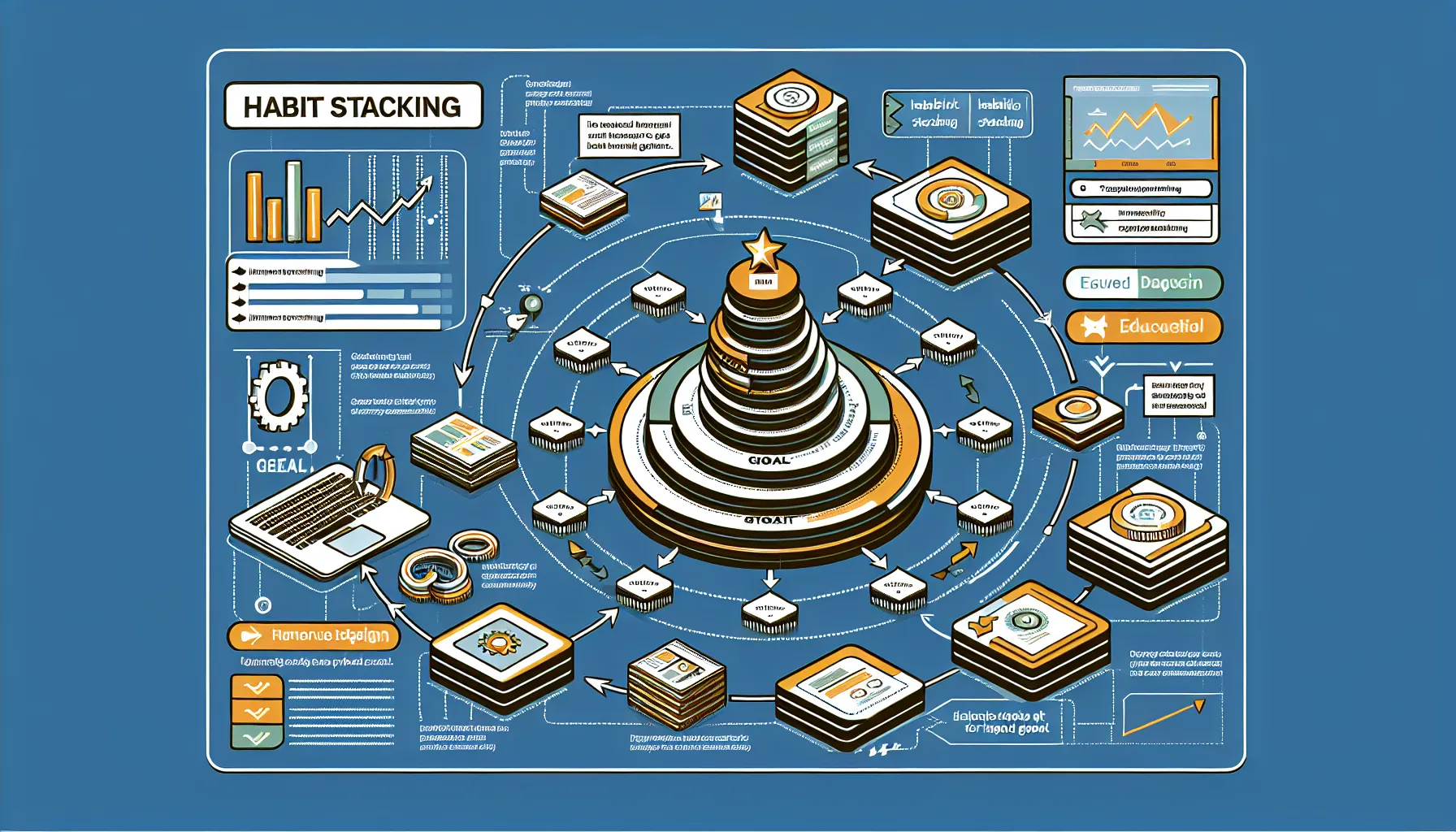
The habit stacking technique is a powerful method for achieving goals effectively by harnessing the momentum of your existing routines. By identifying your current habits and selecting new ones to stack, you can create a seamless flow of productivity that aligns with your goal-setting strategies. This section will explore how to identify your existing habits and choose complementary ones to stack, enabling you to reach your goals more efficiently.
Identifying Your Existing Habits
The first step in habit stacking is assessing your current habits. This involves taking an inventory of your daily routines to uncover potential stacking opportunities. Heres how to get started:
Track Your Daily Activities: Spend a week noting down your routine activities. This could include everything from brushing your teeth to checking your emails.
Identify Key Habits: Highlight habits that occur consistently. These are the foundation for your habit stacking. Look for habits that have a regular trigger, such as waking up, meal times, or commuting.
Evaluate Habit Effectiveness: Assess which of your current habits contribute positively to your life. Are they helping you achieve your goals, or are they merely time fillers?
Look for Patterns: Identify patterns in your habits. Are there certain times of day when you feel more productive or motivated? This can help you find the best moments to integrate new habits.
For example, if you consistently meditate for five minutes every morning, this could be an excellent base for adding another habit, such as journaling your thoughts immediately after.
Choosing New Habits to Stack
Once you have a clear understanding of your existing habits, the next step is to choose new habits to stack. Selecting complementary habits that align with your goals is crucial for effective habit stacking. Heres how to make that decision:
Align with Your Goals: Choose habits that directly contribute to your overarching goals. For instance, if your goal is to improve physical fitness, consider adding a quick workout routine after your morning coffee.
Start Small: Begin with manageable habits that require minimal effort. This could be as simple as drinking a glass of water after brushing your teeth or spending two minutes stretching after lunch.
Ensure Compatibility: Select habits that naturally fit into your existing routines. For example, if you have a habit of checking your phone in the morning, you might stack a reading habit right after that, perhaps by using an app that promotes daily reading.
Consider Time: Be mindful of how much time you are willing to invest in your new habits. If you aim to read for 30 minutes after dinner, make sure you have that time available in your schedule.
Here are a few examples of effective habit stacking:
Morning Routine: After brushing your teeth, take a moment to practice gratitude by writing down three things you are thankful for.
Post-Lunch: After finishing your lunch, take 10 minutes to plan your tasks for the rest of the day.
Evening Wind Down: After turning off your computer for the night, read a chapter of a book that aligns with your personal growth goals.
Conclusion
By identifying your existing habits and choosing new ones that complement them, you can utilize the habit stacking technique to achieve your goals effectively. This strategy not only builds consistency but also creates a structured approach to personal and professional development. According to a study by Harvard Business Review, individuals who effectively integrate habit stacking into their routines report a 40% increase in productivity over those who do not.
In summary, habit stacking can be a game-changer when it comes to goal setting strategies. As you assess your habits and implement new ones, remember to start small and remain flexible. Over time, these stacked habits will create a powerful system that propels you toward your goals.
By leveraging these insights, you will be well on your way to mastering the art of habit stacking and achieving your goals with greater efficiency.
Integrating Goal Setting Strategies with Habit Stacking
The habit stacking technique can significantly enhance your ability to achieve goals effectively when combined with targeted goal setting strategies. By integrating SMART goals with habit stacking, you can create a structured approach to personal and professional development. This section will explore how to set SMART goals and align your habits with long-term objectives, ultimately increasing your chances of success.
Setting SMART Goals
SMART goals are characterized by being Specific, Measurable, Achievable, Relevant, and Time-bound. This framework provides clarity and focus, which is essential when implementing the habit stacking technique. Heres a deeper look at each component:
Specific: Define your goal clearly. Instead of saying “I want to get fit,” specify “I want to run a 5K.”
Measurable: Establish criteria for measuring progress. For example, “I will run three times a week and track my distances.”
Achievable: Ensure your goal is realistic. If youre new to running, aiming to run a marathon in a month is not practical.
Relevant: Your goal should align with your broader life objectives. If health is a priority, then running is relevant.
Time-bound: Set a deadline for your goal. “I want to complete a 5K in three months” provides a clear timeline.
Research shows that individuals who set SMART goals are 33% more likely to achieve them compared to those who do not utilize this framework (source: Harvard.edu). By using SMART goals as a foundation, you can effectively stack habits that contribute to these objectives.
Aligning Habits with Long-Term Objectives
Once SMART goals are defined, the next step is to align daily habits with these objectives. This alignment is crucial for maintaining motivation and ensuring that your habit stacking technique promotes your long-term success. Here are some strategies to consider:
Identify Key Habits: Determine which habits will help you achieve your SMART goals. For example, if your goal is to read more books, a relevant habit could be reading for 20 minutes every morning.
Create a Stacking Routine: Choose existing habits that you can build upon. For instance, if you already have a morning coffee routine, stack your new reading habit immediately after you pour your coffee.
Use Triggers: Establish triggers that signal the start of your stacked habit. For example, after finishing breakfast (trigger), you might meditate for five minutes (new habit).
Monitor Progress: Keep track of your habit stacking through a journal or app. This not only helps in maintaining accountability but also allows you to identify which habits are most effective.
An effective example of habit stacking can be seen in the practice of preparing for the week ahead. Many people integrate a weekly planning session with a Sunday evening relaxation ritual. You might reserve an hour on Sunday evenings to review your goals, plan your week, and then reward yourself with a favorite show or a book. This combination not only helps in setting a clear agenda but also creates a positive association with planning.
Practical Example of Habit Stacking with SMART Goals
| Habit | Goal | Alignment |
|---|---|---|
| --- | --- | --- |
| Morning coffee | Read 20 pages of a book | Enhances knowledge and relaxation |
| Post-lunch walk | Listen to a podcast | Supports health and personal growth |
| Evening reflection | Write in a gratitude journal | Fosters positivity and mental well-being |
Conclusion
Integrating goal setting strategies with the habit stacking technique can revolutionize the way you approach personal and professional growth. By setting SMART goals, you enhance clarity and focus, making it easier to stack habits that align with your long-term objectives. The combination of these strategies not only boosts your likelihood of success but also fosters a more fulfilling journey towards achieving your aspirations.
For further insights on effective habit formation and goal setting, consider exploring recent studies from MIT and the latest research on habits from Psychology Today. These resources provide additional frameworks and evidence-based strategies to enhance your understanding and application of habit stacking.

Current Trends and Future Projections
Rising Popularity of Habit Stacking
The habit stacking technique is gaining traction among individuals seeking to achieve their goals effectively. Recent surveys indicate that approximately 60% of people are now incorporating habit stacking into their daily routines. This shift is largely attributed to the growing understanding of behavioral psychology and the effectiveness of stacking habits to create sustainable change. A report from the American Psychological Association highlights that people who use habit stacking are more likely to stick with their goals for the long term, enhancing their productivity and overall well-being.
Several factors contribute to the rising popularity of habit stacking:
- Increased Awareness: More individuals are learning about the benefits of habit stacking through various media, including podcasts and self-help books.
- Community Support: Online platforms and forums dedicated to personal development foster a sense of community and accountability, motivating individuals to try habit stacking.
- Simple Implementation: The straightforward nature of habit stacking makes it accessible for anyone, regardless of prior experience with goal setting strategies.
A notable example is the success of James Clear’s book “Atomic Habits,” which emphasizes the importance of small changes and habit stacking. Since its release, it has sold over 1 million copies, showing a clear interest in effective habit formation techniques.
Technological Tools Supporting Habit Formation
The rise of technology has also played a significant role in supporting habit formation. Emerging apps and platforms are being developed to assist users in tracking their habits and providing reminders to stack them effectively. According to data from Statista, the global market for mobile health apps is projected to reach $111 billion by 2025, indicating a strong trend towards digital solutions for personal development.
Some prominent apps that support habit stacking include:
- Habitica: This app gamifies habit formation, allowing users to create tasks that can be stacked. Users earn rewards for completing their goals, making the process engaging and motivating.
- Streaks: Designed specifically for habit tracking, Streaks allows users to create a list of habits and receive notifications to remind them to stack these habits effectively throughout the day.
- Productive: This app offers a user-friendly interface for setting habits and provides visual progress tracking, which helps users stay accountable to their goals.
These apps not only serve as reminders but also foster a sense of community among users, encouraging them to share their experiences and support one another in their habit-stacking journeys.
| App Name | Features | User Base (Approx.) |
|---|---|---|
| --- | --- | --- |
| Habitica | Gamification of tasks, rewards system | 2 million |
| Streaks | Visual habit tracking, reminders | 1 million |
| Productive | User-friendly interface, progress tracking | 1 million |
Conclusion and Future Outlook
The future of habit stacking appears promising, with an increasing number of individuals recognizing its potential for achieving goals effectively. As more data emerges on the effectiveness of this technique, it is likely to become a staple in personal development strategies. The integration of technology into habit formation will only serve to enhance the user experience and improve outcomes.
Experts suggest that the combination of habit stacking with emerging technologies will lead to more personalized and adaptive habit-tracking solutions. The potential for artificial intelligence to analyze user behavior and suggest customized habit stacks is an exciting frontier. As noted in a recent article from Wired, the convergence of technology and personal development is paving the way for a new era in productivity.
By leveraging both traditional habit stacking techniques and modern technological tools, individuals can create a powerful framework for achieving their goals. The future will likely see an even broader acceptance of habit stacking as a fundamental component of personal success strategies.

Key Takeaways and Future Outlook
In conclusion, habit stacking emerges as a powerful strategy that can significantly enhance your ability to achieve personal and professional goals. By linking new habits to established routines, you can create a seamless flow in your daily activities, thereby increasing your chances of success. Currently, individuals who implement habit stacking report improved productivity and a greater sense of accomplishment. This method not only helps in forming new habits but also in maintaining them by leveraging the consistency of existing behaviors.
Nowadays, the ability to streamline your routines through habit stacking can be particularly beneficial in our fast-paced world. To effectively implement this strategy, consider identifying a core habit that you already perform regularly. Then, attach a new, related habit to it. For instance, if you already have a morning coffee routine, you might stack a few minutes of journaling right after you finish your cup. This simple technique allows you to maximize your time and mental energy without feeling overwhelmed.
Looking ahead, the future of habit formation is likely to be increasingly intertwined with technology. As we continue to embrace digital solutions, emerging trends indicate that innovative apps and platforms will offer personalized habit-stacking recommendations, making it easier for individuals to set and achieve their goals. According to Forbes, advancements in artificial intelligence will play a crucial role in tailoring habit-building strategies to fit individual lifestyles. This means that the integration of technology in habit formation will not only enhance efficiency but may also provide real-time feedback, further motivating users to stick to their goals.
As we navigate this evolving landscape, it is crucial to stay informed about new tools and resources that can facilitate habit stacking. One actionable takeaway is to explore various habit-tracking applications that can help you visualize your progress and keep you accountable. The Healthline article on habit trackers offers insightful recommendations for finding the right tool for your needs.
In closing, the call to action is clear: embrace the power of habit stacking to supercharge your goal achievement. Start by implementing this strategy today, and be proactive in exploring the technological advancements that can support your habit formation journey. By doing so, you will not only enhance your personal productivity but also stay ahead of the curve in a rapidly changing world. Remember, the path to success is built on the habits we choose to cultivate, so let’s make every moment count.
Frequently Asked Questions
What is the habit stacking technique?
Habit stacking is a productivity technique that involves linking a new habit to an existing one. By associating the new behavior with a well-established routine, you can leverage the momentum of the existing habit to reinforce the new one. This method simplifies the process of building new habits, making it easier to achieve your goals. For example, if you already drink coffee every morning, you could stack a new habit like reading for five minutes right after enjoying your coffee.
How can I start habit stacking?
To start habit stacking, first identify a current habit that you perform consistently. Then, choose a new habit you want to develop and find a way to link it to the existing one. Write down both habits and create a simple statement like, After I [current habit], I will [new habit]. Begin with small, manageable actions to ensure your new habit sticks. Consistency is key, so practice this daily until the new habit becomes second nature.
What are the best habits to stack for productivity?
For enhancing productivity, consider stacking habits like reviewing your goals after your morning coffee, or practicing mindfulness after brushing your teeth. Other effective combinations include taking a five-minute break to stretch after completing a task, or writing a daily to-do list after checking your emails. By combining these habits, you can create a structured routine that not only boosts your productivity but also helps you stay focused on achieving your goals.
Can habit stacking work for any type of goal?
Yes, habit stacking can be applied to virtually any type of goal, whether personal, professional, or health-related. By linking new habits to existing ones, you can create a supportive environment that encourages progress. However, its important to choose habits that align closely with your goals. For example, if your goal is to get fit, you might stack a short workout routine after your morning stretch. This tailored approach maximizes the effectiveness of habit stacking.
How long does it take for a habit to stick with stacking?
The time it takes for a habit to stick varies between individuals, but research suggests it can take anywhere from 21 to 66 days to form a new habit. With habit stacking, the existing habit provides a structure that may help speed up the process. By consistently practicing your stacked habits daily, you can reinforce the new behavior and increase the likelihood of it becoming a permanent part of your routine, especially if you celebrate small wins along the way.
What if I forget to do my stacked habit?
If you forget to perform your stacked habit, dont be discouraged. Its normal to miss a day or two, especially when youre starting out. To improve consistency, consider using reminders, such as setting alarms or placing sticky notes in visible areas. Additionally, reflect on why you forgot and adjust your stacking approach if necessary. Over time, as the new habit becomes more integrated into your routine, it will become easier to remember.
Can I stack multiple habits at once?
While its possible to stack multiple habits, it’s generally more effective to focus on one or two at a time. This helps prevent overwhelm and increases your chances of success. Start by mastering one habit stack, then gradually add more as you become comfortable. Remember that the goal of habit stacking is to create a sustainable routine. Too many new habits at once can lead to burnout, so take your time and build up gradually.